
What is Digital Marketing ?
In todays Market Place every business need expert and strategic marketing to rank higher on google with Digital Marketing. But first of all we need to understand what is digital marketing?
Digital marketing refers to the promotion of a business, product, or service using digital platforms and internet-based technologies. Instead of relying only on traditional advertising methods like newspapers, TV, or banners, digital marketing allows brands to reach people through smartphones, computers, and online platforms where audiences spend most of their time. It helps businesses connect with the right customers, build awareness, increase trust, and boost sales with measurable and targeted strategies.
The biggest advantage of digital marketing is its ability to track results in real-time. Businesses can analyze who interacted with their brand, how they responded, and what improvements are needed. It is also more cost-effective than traditional marketing and offers better audience reach, personalization, and engagement opportunities. Whether a small startup or a large company, every business today benefits from having strong digital marketing strategies
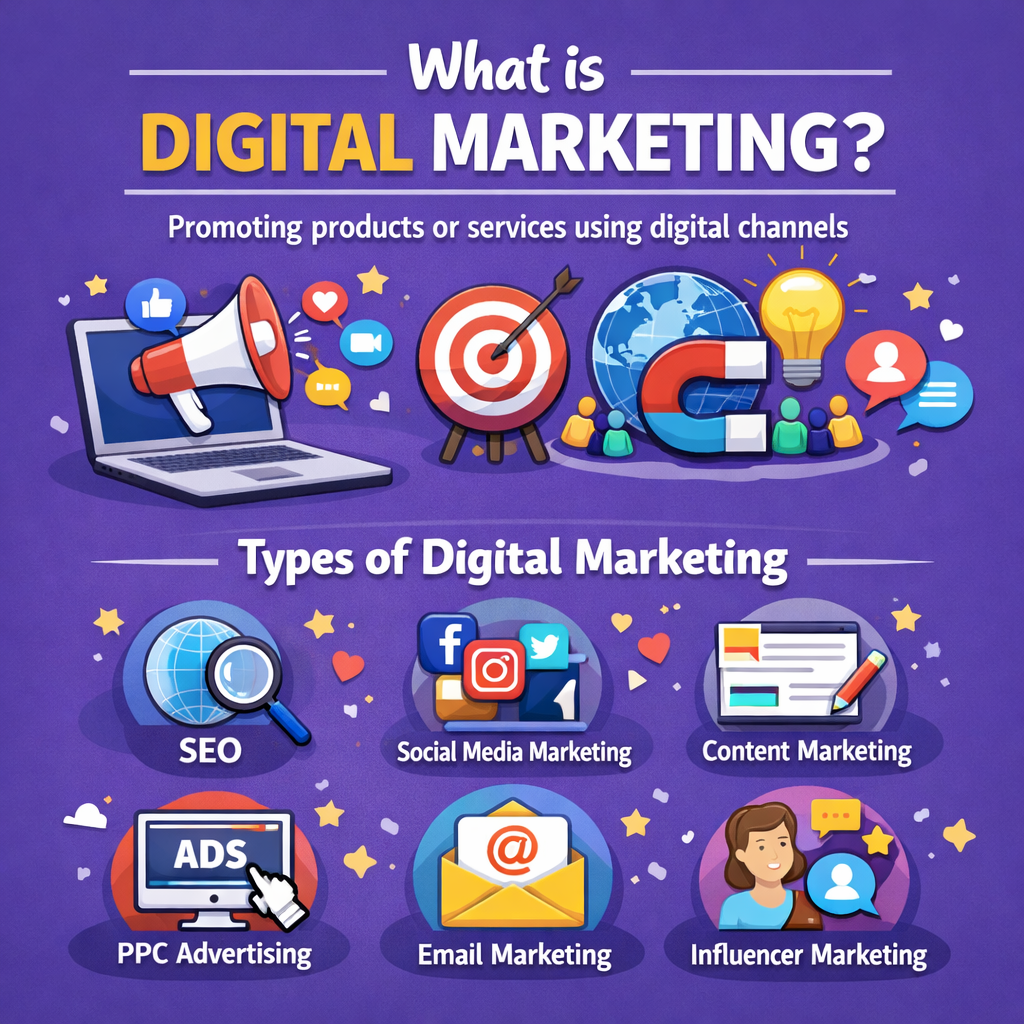
Types Of Digital Marketing
1. Search Engine Optimization (SEO)
- Improves website ranking
- Increases organic traffic
- Builds trust and credibility
- Long-term marketing strategy
– Types of SEO
Search Engine Optimization (SEO)is a type of Digital Marketing. It is not a single activity; it is a combination of strategies designed to improve a website’s visibility on search engines like Google. Different types of SEO work together to make a website rank higher, drive quality traffic, and improve user experience. Understanding these types helps businesses plan smarter and more effective SEO strategies. Below are the major types of SEO explained in detail.
1. On-Page SEO
On-Page SEO refers to all the optimizations done directly on a website to improve its ranking and relevance for search engines. It ensures that both search engines and users can easily understand the content of the page.
Key elements of On-Page SEO include:
- Optimizing keywords naturally within content
- Writing high-quality, useful, and engaging content
- Proper use of heading tags (H1, H2, H3…)
- Optimizing meta titles and descriptions
- Image optimization with alt text
- Internal linking for better navigation
2. Off-Page SEO
Off-Page SEO refers to all the activities carried out outside your website to enhance its credibility, authority, and online reputation. Search engines like Google trust websites more when other reliable platforms refer to or recommend them.
Key elements of Off-Page SEO include:
- Building quality backlinks
- Publishing guest posts
- Earning brand mentions
- Social media engagement
- Influencer collaboration
Among these, backlinks play the most important role. When a high-authority website links to your content, it acts as a strong signal that your website provides useful and trustworthy information. The more relevant and high-quality backlinks your site earns, the stronger your chances become to rank higher in search results.
3. Technical SEO
Technical SEO is focused on improving the technical structure of a website so search engines can crawl, index, and understand it efficiently. Even if your content is great, poor technical performance can stop your site from ranking well.
Technical SEO involves:
- Improving website loading speed
- Mobile-friendly design
- Secure browsing (HTTPS / SSL certificate)
- Fixing broken links and errors
- Proper XML sitemap and robots.txt
- Structured data markup
When technical SEO is done correctly, it ensures smooth website performance, better user experience, and stronger search visibility.
4. Local SEO
Local SEO is important for businesses that serve customers in specific locations. It helps businesses appear in local searches such as “near me” or city-based searches like “best digital marketing agency in Chandigarh.”
Local SEO focuses on:
- Creating and optimizing Google Business Profile
- Local keywords targeting
- Collecting positive customer reviews
- Local citations and directory listings
Local SEO increases visibility among nearby customers, drives foot traffic, and helps local businesses grow effectively.
5. E-Commerce SEO
E-commerce SEO is specifically used for online shopping websites. Its goal is to improve visibility of product pages, categories, and online stores.
It includes:
- Optimizing product titles and descriptions
- Improving product images and alt text
- Creating user-friendly navigation
- Enhancing mobile shopping experience
- Reducing cart abandonment
Strong E-commerce SEO helps online stores attract more buyers and increase sales.
2. Social Media Marketing (SMM)
- Enhances brand visibility
- Builds audience engagement
- Improves digital presence
- Generates traffic and potential leads
Social Media Marketing is also a type of digital marketing focuses on promoting a brand through platforms such as Facebook, Instagram, LinkedIn, and YouTube. It allows businesses to interact with their audience, share meaningful content, showcase services, and create lasting connections. With creative posts, visuals, campaigns, and active communication, social media helps brands increase awareness, boost engagement, earn trust, and reach the right audience more efficiently.
Types of Social Media Marketing
1. Organic Social Media Marketing
- Builds genuine audience relationships
- Focuses on regular posting and engagement
- Enhances brand credibility
- Supports long-term growth
Organic social media marketing focuses on natural growth through consistent posting, engagement, and interaction. It builds trust, loyalty, and long-term audience relationships without paid promotions, creating genuine brand awareness and connection.
2. Paid Social Media Marketing
- Delivers quick visibility
- Targeted audience reach
- Budget-controlled campaigns
- Measurable performance
Paid social media advertising helps brands reach targeted audiences quickly using sponsored ads. It delivers faster visibility, measurable performance, controlled budget spending, and strong results, making it ideal for generating leads and traffic.
3. Influencer & Creator Marketing
- Leverages trusted personalities
- Expands brand reach
- Builds credibility and trust
- Suitable for product promotions
Influencer marketing promotes brands through trusted creators and personalities with loyal audiences. Their recommendations build credibility, expand reach, increase engagement, and help businesses connect with real customers effectively.
4. Social Media Content Marketing
- Focuses on valuable content creation
- Educates and engages users
- Strengthens brand authority
- Supports overall marketing strategy
Social media content marketing focuses on creating engaging posts, videos, and visuals that educate and attract audiences. It strengthens brand identity, boosts engagement, and builds trust without directly selling.
5. Social Media Community & Reputation Management
- Maintains brand reputation
- Builds interactive communities
- Handles queries and feedback
- Improves customer trust
Community and reputation management ensures brands stay connected with audiences through responses, feedback handling, and conversations. It builds trust, loyalty, positive relationships, and maintains a strong brand image.
3. Pay-Per-Click Advertising (PPC)
- Paid online ads
- Instant visibility
- Highly targeted
- Measurable performance
PPC is a very important type of Digital Marketing, PPC advertising allows businesses to show ads on Google and social media platforms and pay only when someone clicks. It provides immediate exposure, fast results, and precise targeting based on keywords, interests, and location. PPC helps businesses generate quick leads, increase website traffic, and achieve measurable ROI.
4. Content Marketing
- Provides valuable information
- Builds authority
- Supports SEO
- Educates and converts users
In this type of digital marketing, focuses on creating useful and engaging content such as blogs, videos, infographics, and articles. Instead of directly selling, it educates and informs customers, building trust and brand authority. Quality content attracts users, improves SEO, drives website traffic, and helps convert interested audiences into loyal customers
5. Email Marketing
- Direct communication
- Personalized messages
- Customer retention
- High ROI
Email marketing is type of digital marketing. this is a powerful way to stay connected with customers through newsletters, offers, promotions, and updates. It allows businesses to deliver personalized messages directly to users’ inboxes, helping build relationships, encourage repeat purchases, and maintain engagement. It is cost-effective, measurable, and highly impactful when done correctly.
6. Affiliate and Influencer Marketing
- Promoted by trusted creators
- Expands brand reach
- Builds credibility
- Drives sales
Affiliate and influencer marketing involves collaborating with influencers, content creators, or partners who promote your products to their audience. Since people trust recommendations from real individuals, this method increases brand trust, awareness, and conversions. It is widely used in e-commerce, fashion, beauty, tech, and many more industries.