
Running a small business in today’s competitive world is not easy. Customers have many choices, markets keep changing, and traditional marketing methods like flyers, posters, and word-of-mouth are no longer enough to attract customers. People now spend most of their time online—searching for products, reading reviews, scrolling social media, and shopping digitally. This means if your small business is not visible online, you are losing customers every single day. That is exactly why digital marketing for small businesses is essential for growth, visibility, and long-term success.
Digital marketing allows small businesses to promote their products and services online using platforms like websites, search engines, social media, email, and paid advertisements. It helps them reach the right customers, build brand awareness, generate leads, increase sales, and understand how to rank higher on Google. Unlike traditional marketing, digital marketing is measurable, affordable, and highly effective, making it the smartest growth solution for small businesses.
Why Digital Marketing for small businesses is important ?
Small businesses need digital marketing not because it is trending, but because it offers real benefits that help them survive, compete, and grow. Here are some key reasons why digital marketing is important:
It Gives Your Business Online Visibility
Most customers search online before buying anything. Whether someone needs a salon, restaurant, clothing store, coaching institute, doctor, or service provider, they check Google and social media first. Digital marketing ensures your business appears where customers are searching.
It Helps Small Businesses Compete with Big Brands
Earlier, only big companies could afford to advertise on TV or newspapers. Today, digital marketing for small businesses creates equal opportunity. With the right strategy, a small brand can rank higher on search engines and build a stronger social media presence than larger competitors.
It is Cost-Effective and Budget-Friendly
Small businesses often have limited budgets. Digital marketing allows them to run campaigns according to their budget. Whether it is Facebook ads, Google promotion, or content marketing, everything can be done in a controlled and affordable way.
It Reaches the Right Audience
Instead of showing ads to everyone, digital marketing allows you to target customers based on location, age, interest, profession, behaviour, and buying intent. This increases chances of getting real customers instead of random viewers.
It Builds Trust and Brand Reputation
People trust online reviews, ratings, and social media presence. A strong digital presence builds credibility and helps customers feel confident when choosing your business.
It Delivers Measurable Results
Every digital activity can be tracked. You know how many people viewed, clicked, interacted, and bought from your campaigns. This helps small businesses improve their strategies and reduce wasteful spending.
How Digital Marketing Helps Small Businesses to Grow
Digital marketing is not just about promotion; it is about long-term growth, Here’s how it supports small business development:
Increases Brand Awareness
When people constantly see your business online, they remember your brand. Over time, this strengthens recognition and trust, making your business more memorable and preferable compared to competitors.
Attracts More Customers
Digital marketing brings potential customers to your website, store, or social media pages. More visitors mean more sales opportunities, helping businesses expand faster and convert interested audiences into paying customers. digital marketing for small businesses is the key aspect.
Boosts Local Presence
Local SEO and Google Business Profile help small businesses appear in “near me” searches, attracting customers from nearby locations and ensuring your business becomes the first choice in your local market.
Generates Quality Leads
Instead of random inquiries, digital platforms bring people genuinely interested in your products or services. This increases conversion chances, improves sales performance, and helps businesses reach customers who actually intend to buy.
Supports Customer Engagement
Through social media, email, and messaging platforms, digital marketing for small businesses enables direct interaction with customers, helping answer queries, build relationships, and strengthen engagement. This ongoing communication improves loyalty, trust, satisfaction, and long-term customer retention.
Effective Digital Marketing Strategies for Small Businesses
To grow successfully, digital marketing for small businesses requires expert strategy. Here are some of the most effective ones:
1. Create a Professional Websites
Your website acts as your online storefront in digital marketing for small businesses. No matter how small your business is, a well-designed website creates a strong first impression. It clearly presents your services, products, contact details, pricing, customer reviews, images, and brand story in one accessible place.
- A professional website should be:
- Mobile responsive
- Quick to load
- Simple to navigate
- Attractive in design
- Secure and regularly maintained
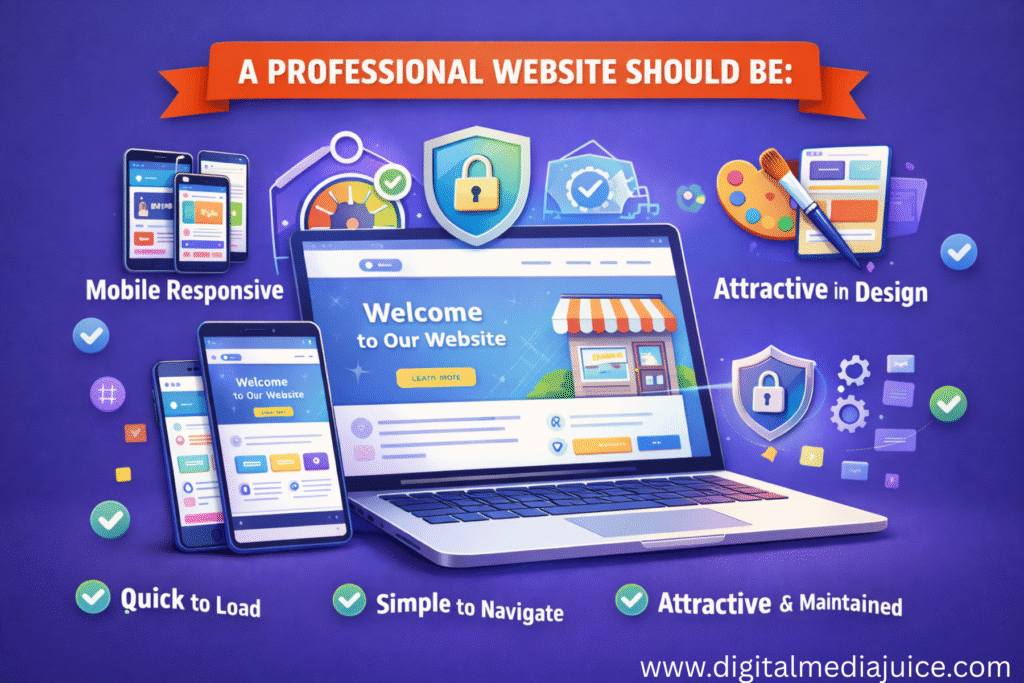
Your website plays a major role in shaping customer trust. It is where many people decide whether to choose your business or move to your competitor, making it the foundation of digital success.
2. Use Search Engine Optimization (SEO)
SEO helps your website appear on Google when customers search for related services. For example:
- “best bakery near me”
- “affordable salon in Chandigarh”
- “digital marketing agency for small business”
SEO helps your business show up in such results. This increases your chances of attracting real customers without paid ads and improves long-term visibility.
3. Create a Google Business Profile
This is extremely important for small and local businesses. Google Business Profile helps your business appear in local searches and Google Maps. Customers can see:
- Business address
- Contact number
- Reviews
- Photos
- Working hours
- Directions
It boosts trust and helps customers contact you easily.
4. Be Active on Social Media
Social media is one of the strongest tools for small businesses. Platforms like Facebook, Instagram, YouTube, and LinkedIn allow you to:
- Showcase products and services
- Share updates
- Post offers and discounts
- Interact with customers
- Build brand personality
With consistent posting and good content, social media helps create strong connections and brand loyalty.
5. Use Paid Advertising Smartly
Paid ads give quick results. Small businesses can run budget-friendly ads on:
- Facebook Ads
- Instagram Ads
- Google Ads
- YouTube Ads
These help generate fast leads, website visits, and customers.
6. Give Importance to Content Marketing
Content plays a major role in building trust in digital marketing for businesses growth . By sharing informative blogs, engaging videos, useful guides, helpful tips, and educational material, businesses can showcase their knowledge and expertise. When customers find your content valuable, they begin to trust your brand more, which eventually leads to stronger relationships and better conversions.
7. Use Email and WhatsApp Marketing Effectively
Email and WhatsApp marketing are powerful tools for staying connected with customers. By sending regular updates, exclusive offers, reminders, and newsletters, small businesses can keep their audience engaged. These platforms help maintain communication, encourage repeat purchases, and strengthen customer loyalty.
Challenges Small Businesses Face in Digital Marketing
Even though digital marketing offers great opportunities, small businesses may still experience certain difficulties, such as:
- Limited understanding of digital strategies
- Budget restrictions
- Inconsistency in execution
- Managing different platforms at once
- Difficulty in analysing performance data
However, with the right planning, learning, or professional support from a digital marketing agency, these challenges can be easily managed, allowing businesses to achieve better and more consistent results.
How to Rank higher on Google
Every small businesses owners have only one question in their mind that how to rank higher on Google.
Well it requires a clear strategy built on quality content, technical optimization, and user-focused design. By using relevant keywords, improving page speed, optimizing mobile experience, and earning credible backlinks, businesses can strengthen visibility and attract the right audience through digital marketing for small businesses.
Consistent publishing, local SEO, and data tracking help refine performance and improve rankings over time. When guided by analytics, audience behaviour, and search intent, digital marketing for small businesses becomes a powerful method to increase reach, build trust, and achieve sustainable growth in competitive online markets.
Future of Digital Marketing for Small Businesses
The future of digital marketing for small businesses is extremely promising, offering new opportunities for smarter growth. With rapid technological advancements, marketing is becoming more efficient, personalized, and customer-focused. Tools such as artificial intelligence, automation, video-driven content, and voice search are reshaping how brands connect with their audience. These innovations make it easier for small businesses to understand customer behaviour, improve engagement, and deliver meaningful, result-driven experiences in an increasingly digital marketplace.
In the coming years, digital marketing will focus heavily on personalization—showing customers exactly what they need at the right time. Data-driven strategies will help businesses make better decisions, while social media, mobile marketing, and AI-powered tools will simplify campaigns and improve results. Small businesses that adapt early, stay consistent, and invest in strong online presence will gain a massive competitive advantage and experience steady growth in the digital marketplace.